Top 10 Tips for a Stress-Free Move in the UK
Move Cost Calculator Team
content compiled from credible research to provide accurate, reliable information.
Quick Answer| Last updated: May 2026
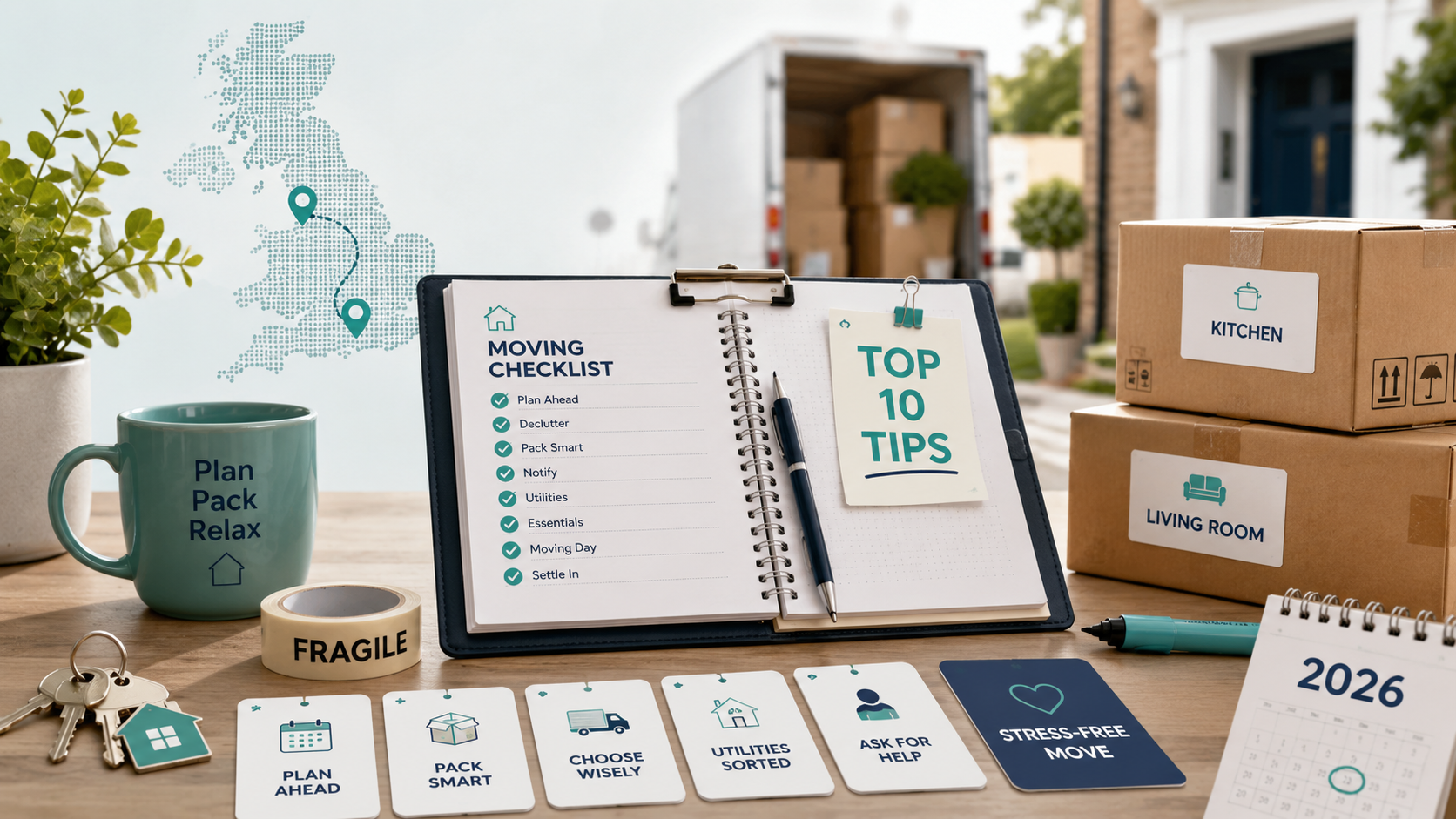
The secret to a stress-free move is starting early (at least 8 weeks before), decluttering ruthlessly to reduce volume, and booking a reputable removal company mid-week to save money and ensure better service.
Moving house can be one of life's most stressful events. Here are our top 10 expert tips to make your UK move as smooth as possible.
Key Takeaways
- •Plan Early: Start planning your move at least 6-8 weeks in advance to secure the best dates and rates.
- •Compare Quotes: Always compare at least 3 local removal quotes to ensure you get a fair market price.
- •Declutter: Reducing the volume of your belongings is the most effective way to lower your moving costs.
Want a quick estimate before you read the full guide?
Use our moving cost calculator →How to Achieve a Stress-Free House Move: The Definitive UK Guide
Psychologists consistently rank moving house as one of the most stressful life events a person can endure, sitting right alongside divorce and starting a new job. The combination of financial pressure, logistical complexity, physical exhaustion, and emotional upheaval creates a perfect storm of anxiety.
However, a chaotic, tear-filled moving day is not inevitable. The secret to a stress-free move lies not in working harder on the day, but in meticulous preparation in the weeks leading up to it. By breaking the mammoth task into manageable chunks and delegating effectively, you can maintain your sanity and even enjoy the transition to your new home. This guide provides our top 10 expert tips for a smooth UK relocation.
The 4 Pillars of a Calm Move
Begin planning and decluttering at least 8 weeks before your moving date. Panic is the enemy of calm.
Financial surprises cause stress. Use our calculators to know your costs upfront.
You cannot do everything yourself. Hire professionals for the heavy lifting and packing if possible.
Keep your sanity on the first night by having everything you need immediately to hand in your own car.
1. Ruthless Decluttering is Mandatory
The most common mistake people make when moving is packing items they no longer want, need, or use. Moving clutter from one house to another wastes time, wastes packing materials, and increases your removal quote.
The "One Year" Rule:
If you haven't used an item, worn a piece of clothing, or read a book in the last 12 months, do not pack it. Sell it on Vinted, donate it to the British Heart Foundation, or recycle it. Every box you don't pack is money saved and stress avoided.
2. Mastery of the Administrative Burden
Admin stress is often worse than physical stress. Forgetting to redirect your post or set up the internet in the new house can cause weeks of headaches.
Create a 'Moving Folder'
Keep all your legal documents, estate agent correspondence, removal quotes, and utility meter readings in one physical ring binder. Keep it with you on moving day.
The "Change of Address" Sprint
Notify your bank, employer, DVLA, doctors, and HMRC at least two weeks before you move. Use Royal Mail redirection for at least 6 months.
Utility Snapshots
Take clear photos of your gas, electric, and water meters in both properties. These photos are your only evidence in a billing dispute.
3. The "Open Me First" Box (Survival Kit)
When you arrive at the new house at 6 PM, exhausted and hungry, the last thing you want to do is open ten different boxes looking for the kettle. Pack a clear plastic box and keep it in your car. It must contain:
- • Kettle, mugs, tea, coffee, and long-life milk.
- • Toilet roll, hand soap, and towels.
- • Phone chargers and essential electronics.
- • Basic tools (screwdriver, scissors, Allen keys).
- • Bed linen and pillows for the first night.
- • Medication and a basic first aid kit.
4. Hiring Professional Help
Trying to move a 3-bedroom house with a hired transit van and two reluctant friends is a recipe for disaster, injury, and broken friendships.
Investing in a professional, fully insured removal company is the single best way to reduce moving stress. They have the equipment, the stamina, and the expertise to navigate tight staircases and heavy sofas. If your budget allows, opting for a professional packing service will literally save you weeks of evening and weekend work.
Ready to find reliable movers?
Request quotes from vetted local removal companies →Frequently Asked Questions
What is the most stressful part of moving?
For most people, it's the uncertainty of property chains and the physical act of packing. You can't control the chain, but you can control the packing by starting early or hiring professionals.
How can I keep my kids and pets calm?
Stick to their routines as much as possible. For kids, involve them in the process. For pets, keep them in a quiet 'safe room' on moving day. Read our Moving with Kids and Moving with Pets guides.
Official & Trustworthy Resources
For further official guidance on moving house in the UK, we recommend consulting the following trusted organisations:
Frequently Asked Questions
How much does it cost to move house in the UK?
The average cost of moving house in the UK ranges from £800 to £2,500 depending on property size, distance, and whether you use professional packing services.
What affects removal company prices?
Key factors include the volume of your belongings, the distance of the move, ease of access (stairs, parking), and the time of year (weekends and summer are more expensive).
Are removal costs higher on weekends?
Yes, Fridays and Saturdays are the most popular days to move, meaning removal companies often charge a premium. Moving mid-week can save you up to 20%.
Can I reduce moving costs by comparing quotes?
Absolutely. We recommend comparing at least 3 local quotes from verified removal companies to ensure you get a fair market rate and avoid overpaying.
Ready to Estimate Your Moving Costs?
Use our free, AI-powered moving cost calculator to get an instant, accurate estimate for your UK house move. No hidden fees, just honest pricing.