Moving House with a Cat: Expert Tips for a Stress-Free Relocation
Move Cost Calculator Team
content compiled from credible research to provide accurate, reliable information.
Quick Answer| Last updated: May 2026
Keep your cat in a secure, quiet room on moving day with their litter tray, food, and water. Update their microchip address immediately, and keep them indoors for at least two weeks at the new house to prevent them from getting lost.
Cats are highly territorial animals. Learn how to keep your feline friend calm, safe, and secure before, during, and after your house move.
Key Takeaways
- •Plan Early: Start planning your move at least 6-8 weeks in advance to secure the best dates and rates.
- •Compare Quotes: Always compare at least 3 local removal quotes to ensure you get a fair market price.
- •Declutter: Reducing the volume of your belongings is the most effective way to lower your moving costs.
Want a quick estimate before you read the full guide?
Use our moving cost calculator →Moving house is widely considered one of life's most stressful events, but for a cat, it can be entirely overwhelming. Cats are highly territorial creatures who form strong bonds with their environment. A sudden change in their surroundings, combined with the chaos of packing boxes and strangers in the house, can cause severe anxiety.
This comprehensive guide will walk you through exactly how to manage your cat's relocation before, during, and after moving day to ensure a smooth transition to your new UK home.
Quick Answer
Keep your cat in a secure, quiet room on moving day with their litter tray, food, and water. Update their microchip address immediately via your registry, and keep them indoors for at least two weeks at the new house to prevent them from getting lost. For a broader pet guide, see our moving with pets overview.
1. Preparation Before the Move
Preparation should begin weeks before the removal van arrives. The goal is to gently acclimatise your cat to the changes happening around them.
- Update Microchip Details: This is a legal requirement in the UK and absolutely vital. Update your address with your microchip database provider before you move.
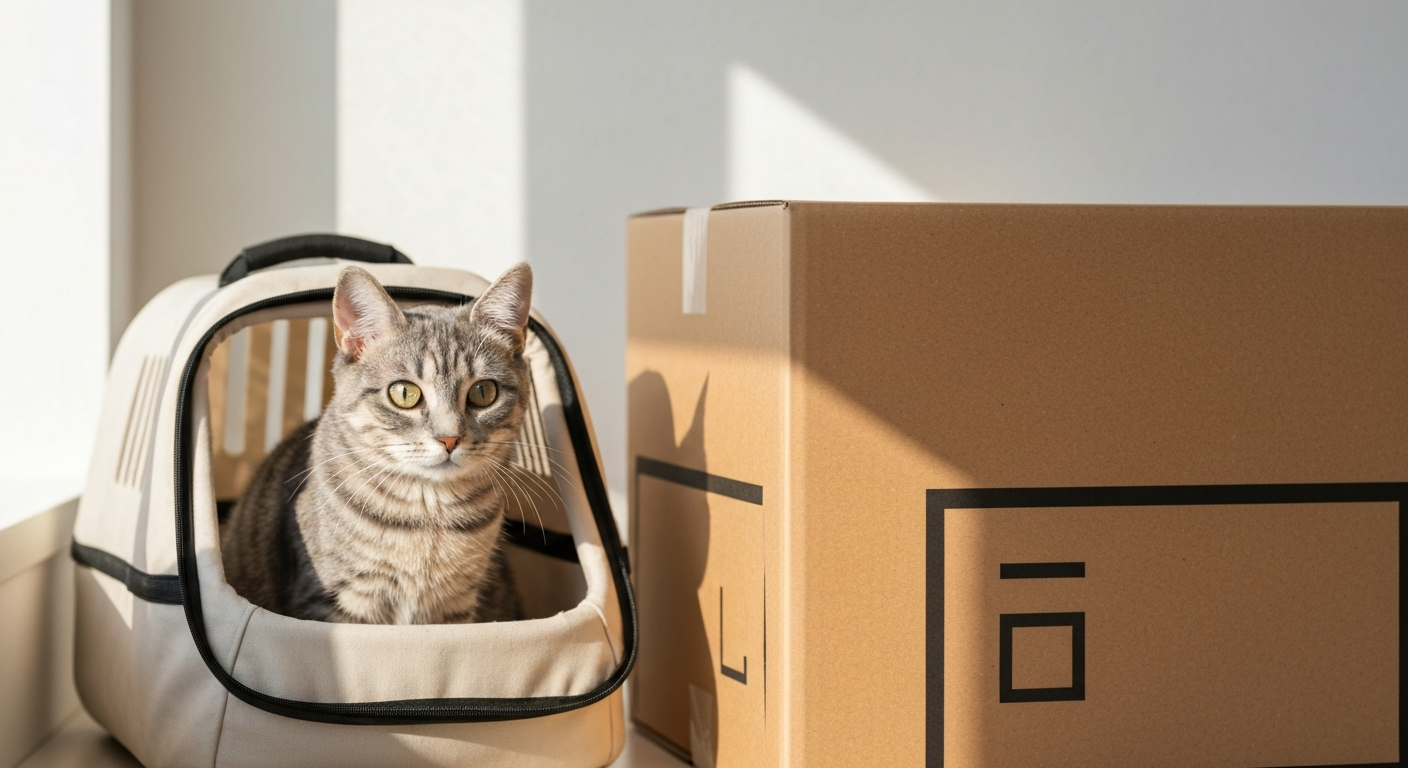
- Leave the Carrier Out: Bring the cat carrier out a few weeks early. Leave the door open and put a familiar blanket or treats inside so they associate it with comfort, not just trips to the vet.
- Use Pheromone Diffusers: Plug in a synthetic feline pheromone diffuser (like Feliway) in your current home a week before the move to help keep them calm.
If you are planning your moving budget, don't forget to account for pet supplies and potential cattery fees. Use our moving cost calculator to get a full estimate of your relocation expenses.
2. Managing Moving Day
Moving day is chaotic. Doors will be propped open, and removal teams will be walking in and out. This is the highest risk period for a cat to bolt and get lost.
The "Safe Room" Strategy
First thing in the morning, place your cat in one dedicated room (like a bathroom or spare bedroom) with their litter tray, food, water, and carrier. Lock the door and place a large sign on the outside saying: "CAT INSIDE - DO NOT OPEN." Ensure the removal team knows this room is strictly off-limits until the very end.
Alternatively, consider booking your cat into a reputable cattery for a few days. This removes them from the stress entirely and gives you time to unpack and set up the new house. You can find licensed catteries through the RSPCA or local council listings.
3. Transporting Your Cat
Never transport your cat in the back of the removal van. They must travel in the car with you where the temperature is controlled and you can monitor them.
- Secure the carrier with a seatbelt.
- Do not feed them a large meal right before the journey to prevent motion sickness.
- Cover the carrier with a light, breathable blanket to reduce visual stimulation and keep them calm.
- Never open the carrier door during the journey, even if they are crying.
4. Settling into the New Home
When you arrive, set up a new "safe room" immediately. Place their familiar bedding, unwashed toys, food, and litter tray in this room. Let them stay in this room for the first few days while you unpack the rest of the house.
According to Cats Protection, you should keep your cat completely indoors for at least two to three weeks after moving. This allows them to establish the new house as their core territory. If you let them out too soon, they may try to navigate back to your old home.
When you finally let them out, do it just before their normal mealtime. Go outside with them, leave the door open so they can retreat if spooked, and call them back in for food after 10-15 minutes. Gradually increase their outdoor time over the following days.
Ready to Plan Your Move?
Ensure your move is as stress-free for you as it is for your cat. Use our free tools to estimate your moving expenses and compare local quotes.
Official & Trustworthy Resources
For further official guidance on moving house in the UK, we recommend consulting the following trusted organisations:
Frequently Asked Questions
How much does it cost to move house in the UK?
The average cost of moving house in the UK ranges from £800 to £2,500 depending on property size, distance, and whether you use professional packing services.
What affects removal company prices?
Key factors include the volume of your belongings, the distance of the move, ease of access (stairs, parking), and the time of year (weekends and summer are more expensive).
Are removal costs higher on weekends?
Yes, Fridays and Saturdays are the most popular days to move, meaning removal companies often charge a premium. Moving mid-week can save you up to 20%.
Can I reduce moving costs by comparing quotes?
Absolutely. We recommend comparing at least 3 local quotes from verified removal companies to ensure you get a fair market rate and avoid overpaying.
Ready to Estimate Your Moving Costs?
Use our free, AI-powered moving cost calculator to get an instant, accurate estimate for your UK house move. No hidden fees, just honest pricing.