Moving House with a Baby: Health, Safety & Routine Tips
Move Cost Calculator Team
content compiled from credible research to provide accurate, reliable information.
Quick Answer| Last updated: May 2026
Pack a 'baby essentials' bag with enough nappies, milk, and snacks for 48 hours. Try to keep sleep routines identical, and if possible, have a relative watch the baby on the actual moving day.
A practical UK guide for parents moving house with a baby or toddler. Covers planning, packing, baby-proofing, and settling in without disrupting routine.
Key Takeaways
- •Plan Early: Start planning your move at least 6-8 weeks in advance to secure the best dates and rates.
- •Compare Quotes: Always compare at least 3 local removal quotes to ensure you get a fair market price.
- •Declutter: Reducing the volume of your belongings is the most effective way to lower your moving costs.
Want a quick estimate before you read the full guide?
Use our moving cost calculator →Moving House with a Baby: A Complete UK Parent's Survival Guide
Moving house is consistently ranked as one of the most stressful life events in the UK — and adding a baby or toddler to the mix amplifies that stress considerably. Between nap schedules, feeding times, nappy changes, and the sheer volume of equipment babies require, a house move with a young child demands a level of planning that goes well beyond the standard moving checklist.
The good news is that babies are more resilient than we often give them credit for. With some thoughtful preparation, the right support, and realistic expectations, you can move home safely and successfully — even with a very young child in tow. This guide covers everything from pre-move planning and packing strategies to keeping your baby safe on moving day and settling into your new home.
1. Start Planning Earlier Than You Think
Most families without children start serious move preparation around four to six weeks before moving day. With a baby, you should begin planning at least eight weeks out. The reason is simple: babies are unpredictable. You'll have days where tasks take three times as long as expected because of unsettled sleep, illness, or feeding challenges.
Start by breaking your preparation into short, manageable tasks. Trying to pack an entire room in one go while caring for a baby is a recipe for exhaustion. Instead, aim to pack one or two boxes each evening once the baby is settled, or during nap time. Over eight weeks, this gentle approach will get everything done without burning you out before moving day.
One of the most practical things you can do early on is research your new area thoroughly. Where is the nearest children's centre, GP surgery with paediatric appointments, and pharmacy? Registering your baby with a new GP should be one of your first tasks after moving in. The NHS allows you to register with a new practice online via the NHS website.
Estimate Your Family Home Moving Cost
Family homes typically involve more items, more logistics, and more complexity. Use our free calculator to get a realistic cost estimate before speaking to removal companies.
2. The Baby "First Night" Box — Your Most Important Pack
Every experienced mover will tell you to prepare a "first night" box of essentials. When you have a baby, this box becomes non-negotiable. After a long, tiring moving day, the last thing you need is to be rummaging through twenty boxes trying to find nappies or a steriliser.
Pack this box last so it can be unloaded first, and keep it with you in your personal vehicle if possible — not in the removal van. Label it clearly with bright tape or a distinctive marker.
3. Protecting Routine on Moving Day
Babies and toddlers are highly sensitive to changes in routine. While it may be impossible to keep everything perfectly normal on moving day, preserving key anchors — particularly nap times and meal times — can make a significant difference to how settled your baby feels throughout the day and in the days that follow.
If possible, arrange for a trusted family member, friend, or babysitter to look after your baby during the bulk of the move itself. This allows the removal team to work efficiently without having to navigate around a crawling baby, and it means your child can be kept in a calm, familiar environment (perhaps at a grandparent's house) until the new home is ready to receive them.
If external childcare isn't an option, designate one room at your new property as the "baby zone" as early as possible during unloading. Set up the cot, a familiar mat, their toys, and the white noise machine before anything else. Having a safe, semi-familiar space waiting for your baby will help them transition much more smoothly.
4. Safety-Proofing Your New Home
Before your baby is allowed to explore your new home, conduct a thorough safety audit. This is especially important because previous occupants may have left behind hazards you wouldn't encounter in a home you've lived in for years. The Royal Society for the Prevention of Accidents (RoSPA) provides excellent guidance on child-proofing a new home.
5. Packing with a Baby in the House
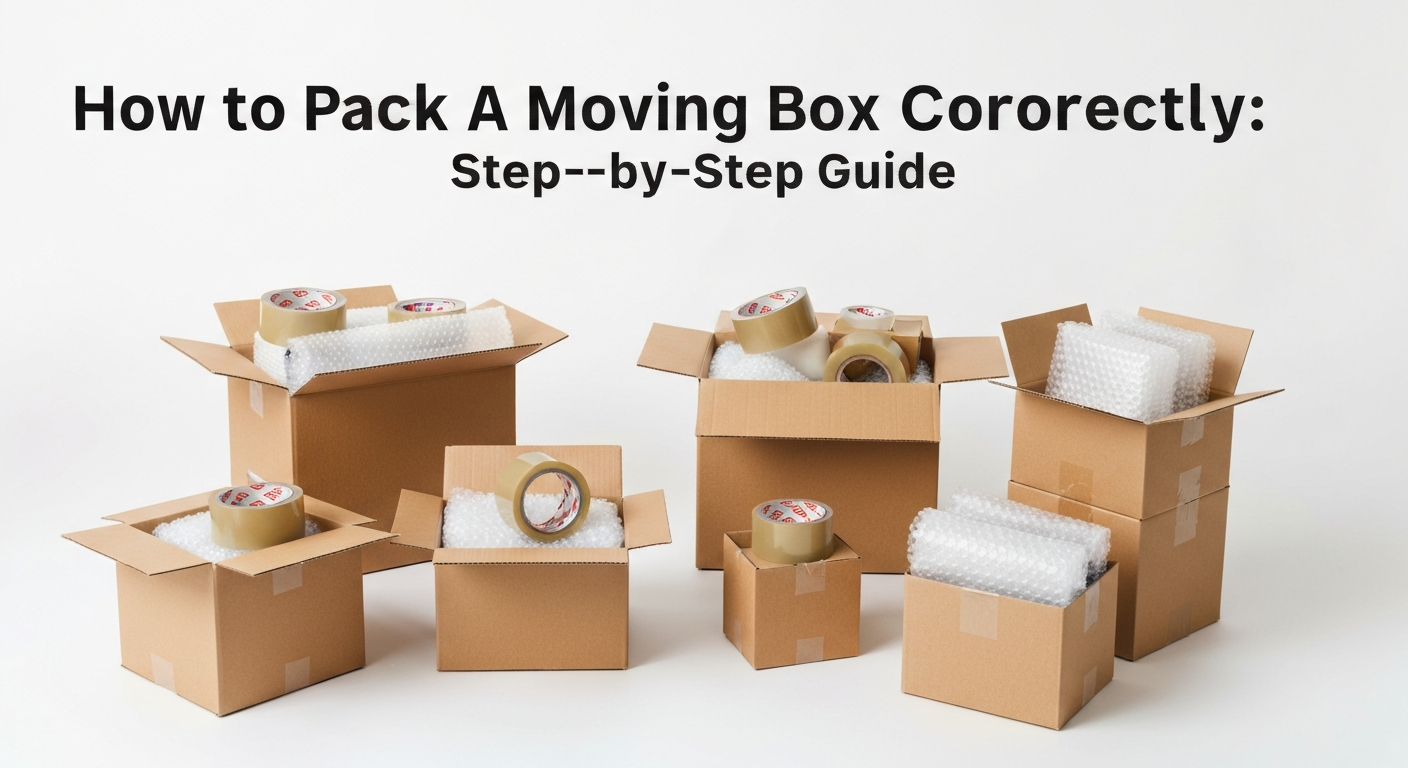
Packing boxes when you have a baby at home requires a different strategy to the standard approach. The biggest risk is that packing materials — bubble wrap, packing tape, small polystyrene peanuts — become hazardous if a baby gets hold of them. Maintain strict discipline about keeping packing materials out of reach at all times.
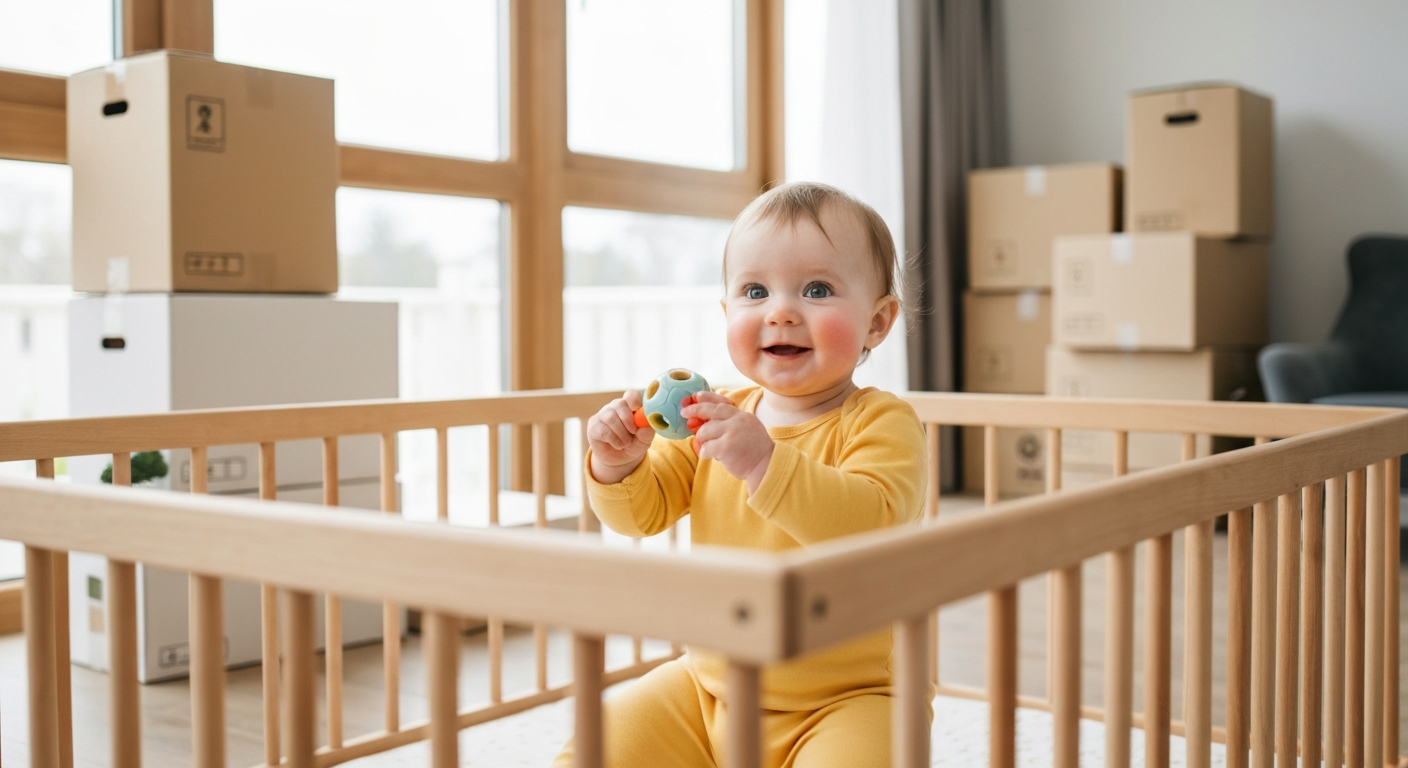
A practical approach is to have a dedicated "packing zone" in one room that the baby cannot access. Pack in one room at a time, seal boxes as soon as they're full, and stack them in an area the baby can't reach. Use a playpen or a safe corner with toys to keep your baby entertained and contained while you pack nearby.
Consider using a packing box calculator to estimate how many boxes you'll need. Having the right quantity delivered in advance reduces the number of trips to the shops with a baby in tow, which can be exhausting and time-consuming.
6. Professional Removal vs. DIY with a Baby
For families moving with a baby, professional removal services are almost always worth the extra cost. Trying to move a family home with a baby using a hired van and reluctant friends is physically and mentally draining in a way that is difficult to appreciate until you're in the middle of it.
Professional removal companies can also offer packing services, which remove an enormous burden from parents. If budget allows, even a partial packing service — where the removal team packs the fragile or awkward items — can significantly reduce your pre-move stress. For a guide to what these services typically cost, see our article on professional packing service costs in the UK.
When requesting quotes, mention that you have a baby. Some companies are particularly experienced with family moves and will factor this into their planning — for example, ensuring the van is loaded to minimise the number of trips and that the baby's room items are clearly segregated for easy unloading first.
7. Settling In: The First Week
The first week in a new home is the most unsettled period for both parents and baby. Expect some disrupted sleep as your baby adjusts to new sounds, smells, and light levels. Keep as much of their sleep environment consistent as possible — the same cot, the same sleeping bag, the same bedtime routine.
Introduce the new home gradually. Let your baby explore one room at a time rather than being overwhelmed by a completely unfamiliar environment all at once. Familiar toys, blankets, and the smell of you and your partner are powerful anchors that help babies feel secure.
Don't pressure yourself to unpack everything in the first few days. Prioritise the baby's room, the kitchen, and the bathroom. Everything else can wait. Give yourself permission to spend the first week simply settling in as a family rather than racing through unpacking.
Plan Your Family Move Budget
Family home moves typically involve more items and more complexity. Use our tools to estimate your moving costs, work out how many packing boxes you'll need, and request no-obligation local quotes.
Frequently Asked Questions
What is the best age to move house with a baby?
There is no perfect age, but many parents find it slightly easier to move with a newborn (before they are fully mobile) or after a toddler passes the age of two and can be talked through the change. The most challenging window is often between 8 and 18 months when babies are mobile but cannot understand explanations.
Should I keep my baby at home on moving day?
If you have the option, it is generally easier to have your baby cared for by a trusted family member or friend away from the property during the main loading and unloading phase. This keeps them safe, keeps the removal team efficient, and reduces your stress.
How do I keep my baby's room consistent during a move?
Pack the baby's room last and unpack it first. Use the same cot, the same bedding, and the same white noise machine where possible. The familiar smells and surroundings will significantly help your baby adjust.
Will moving house affect my baby's sleep routine?
Temporarily, yes. Most babies take one to two weeks to fully settle in a new home. Maintain your bedtime routine as rigidly as possible — same bath time, same story, same routine — and the disruption should be short-lived.
How much does it cost to move a family home in the UK?
The cost varies significantly depending on property size, distance, and whether you use packing services. A 3-bedroom family home local move typically costs £800–£1,500 as a guide, with long-distance moves or packing services costing more. Use our free Moving Cost Calculator for a personalised estimate.
Can I claim any moving costs back if I'm relocating for work?
HMRC allows employees to claim up to £8,000 in job-related relocation expenses without paying tax, if the costs are reimbursed by an employer and meet certain criteria. Check the HMRC guidance on their website for full details.
Disclaimer: All cost estimates mentioned in this article are approximate guide figures for 2026 and may vary depending on your specific location, property size, distance, access conditions, and the removal company you choose. Always request multiple quotes before booking. External links are provided for informational purposes only.
Official & Trustworthy Resources
For further official guidance on moving house in the UK, we recommend consulting the following trusted organisations:
Frequently Asked Questions
How much does it cost to move house in the UK?
The average cost of moving house in the UK ranges from £800 to £2,500 depending on property size, distance, and whether you use professional packing services.
What affects removal company prices?
Key factors include the volume of your belongings, the distance of the move, ease of access (stairs, parking), and the time of year (weekends and summer are more expensive).
Are removal costs higher on weekends?
Yes, Fridays and Saturdays are the most popular days to move, meaning removal companies often charge a premium. Moving mid-week can save you up to 20%.
Can I reduce moving costs by comparing quotes?
Absolutely. We recommend comparing at least 3 local quotes from verified removal companies to ensure you get a fair market rate and avoid overpaying.
Ready to Estimate Your Moving Costs?
Use our free, AI-powered moving cost calculator to get an instant, accurate estimate for your UK house move. No hidden fees, just honest pricing.