How to Protect Your Floors and Walls on Moving Day
Move Cost Calculator Team
content compiled from credible research to provide accurate, reliable information.
Quick Answer| Last updated: May 2026
Use self-adhesive carpet protector film for carpets, and Ram Board or heavy-duty corrugated cardboard for hard floors. Wrap banisters in moving blankets, and use corner guards on high-traffic doorways.
Prevent expensive property damage during your move. Discover the best materials and techniques for protecting carpets, hard floors, walls, and door frames.
Key Takeaways
- •Plan Early: Start planning your move at least 6-8 weeks in advance to secure the best dates and rates.
- •Compare Quotes: Always compare at least 3 local removal quotes to ensure you get a fair market price.
- •Declutter: Reducing the volume of your belongings is the most effective way to lower your moving costs.
Want a quick estimate before you read the full guide?
Use our moving cost calculator →Moving day involves heavy furniture, muddy boots, and bulky boxes navigating tight spaces. Without proper protection, it's incredibly easy to scratch hardwood floors, stain carpets, or gouge plasterboard walls. Whether you are moving out to ensure your deposit is returned, or moving into your new pristine home, protecting the property is vital.
Quick Answer
Use self-adhesive carpet protector film for carpets, and Ram Board or heavy-duty corrugated cardboard for hard floors. Wrap banisters in moving blankets, and use corner guards on high-traffic doorways to prevent gouges from furniture.
1. Protecting Carpets
Carpets are vulnerable to mud, dirt, and spills on moving day. Movers cannot take their shoes off every time they enter the house due to health and safety regulations regarding heavy lifting.
The Solution: Buy rolls of self-adhesive carpet protector film. This clear plastic film rolls out quickly, sticks directly to the carpet without leaving residue, and provides a waterproof barrier against muddy boots. Do not use standard plastic dust sheets, as they slip easily and create a major trip hazard.
2. Protecting Hard Floors (Wood, Laminate, Tile)
Hard floors can be scratched by grit under shoes, or dented if heavy items are dropped.
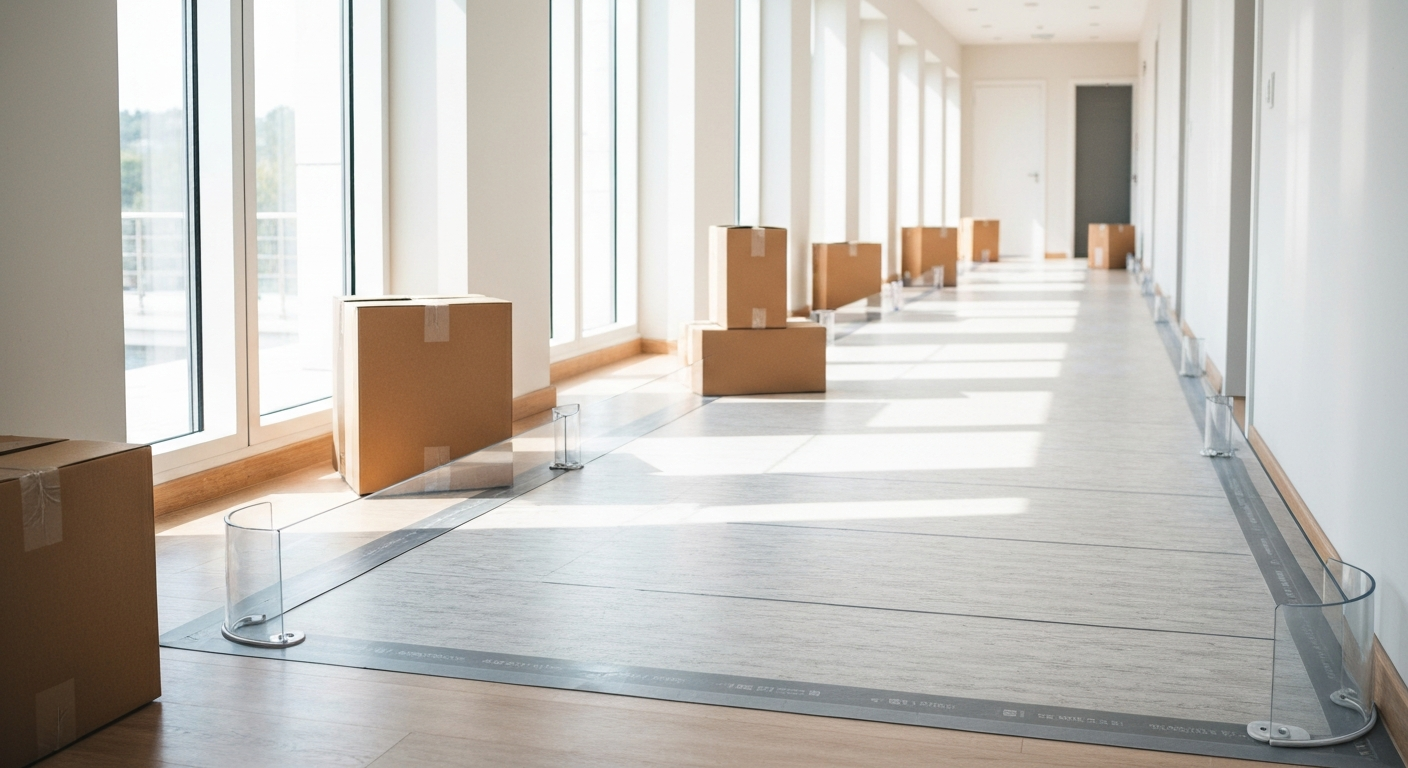
- Ram Board / Floorboard: This heavy-duty, breathable cardboard comes in rolls and is the industry standard for floor protection. Tape the seams together with non-marking tape.
- Furniture Sliders: Never drag heavy furniture across a hard floor. Use felt furniture sliders under the legs to glide items safely.
Avoid Tape on Floors
Never apply packing tape or duct tape directly to hardwood or laminate floors. It can strip the finish when removed. Only use specialized painter's tape or floor tape.
3. Protecting Walls, Corners, and Doors
Tight corners and door frames bear the brunt of moving damage as sofas and mattresses are squeezed through.
- Corner Guards: Purchase cardboard or plastic corner guards and temporarily tape them to high-traffic corners in hallways.
- Door Jamb Protectors: These padded protectors clip onto door frames. Alternatively, wrap moving blankets around the frames and secure them with tape.
- Banisters: Wrap stair banisters tightly in moving blankets or bubble wrap.
Professional Movers
If you hire a reputable removal company, they will usually provide basic floor protection (like heavy-duty runners) as part of their service. However, it's always worth confirming this when you compare local quotes. If you are doing a DIY move, you will need to purchase these materials yourself, which should be factored into your overall moving budget.
Ready to Plan Your Move?
Take the stress out of your relocation by understanding your costs upfront. Use our free tools to estimate your moving expenses and compare local quotes.
Official & Trustworthy Resources
For further official guidance on moving house in the UK, we recommend consulting the following trusted organisations:
Frequently Asked Questions
How much does it cost to move house in the UK?
The average cost of moving house in the UK ranges from £800 to £2,500 depending on property size, distance, and whether you use professional packing services.
What affects removal company prices?
Key factors include the volume of your belongings, the distance of the move, ease of access (stairs, parking), and the time of year (weekends and summer are more expensive).
Are removal costs higher on weekends?
Yes, Fridays and Saturdays are the most popular days to move, meaning removal companies often charge a premium. Moving mid-week can save you up to 20%.
Can I reduce moving costs by comparing quotes?
Absolutely. We recommend comparing at least 3 local quotes from verified removal companies to ensure you get a fair market rate and avoid overpaying.
Ready to Estimate Your Moving Costs?
Use our free, AI-powered moving cost calculator to get an instant, accurate estimate for your UK house move. No hidden fees, just honest pricing.