How to Pack a Moving Box Correctly: Step-by-Step Guide
Move Cost Calculator Team
content compiled from credible research to provide accurate, reliable information.
Quick Answer| Last updated: May 2026
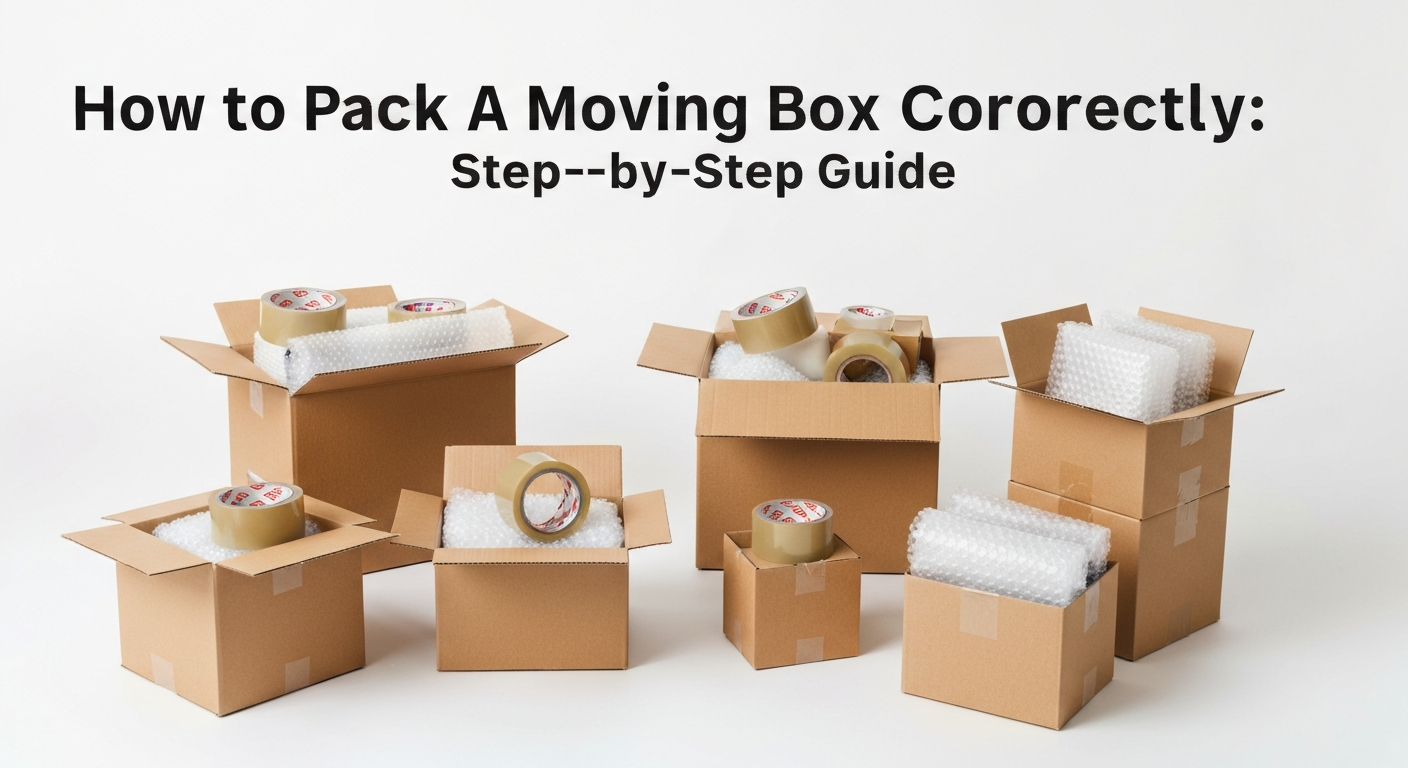
A correctly packed box has a reinforced base, cushioning at the bottom and top, heavier items on the bottom, no empty gaps, and a securely sealed and labelled lid. Boxes should weigh no more than 20kg and the lid should close flat without bowing.
Learn how to pack a moving box correctly to prevent breakages, make loading easier, and protect your belongings in transit. Covers box sizes, taping, cushioning, and labelling.
Key Takeaways
- •Plan Early: Start planning your move at least 6-8 weeks in advance to secure the best dates and rates.
- •Compare Quotes: Always compare at least 3 local removal quotes to ensure you get a fair market price.
- •Declutter: Reducing the volume of your belongings is the most effective way to lower your moving costs.
Want a quick estimate before you read the full guide?
Use our moving cost calculator →Packing a box incorrectly is one of the most common causes of breakages during a house move. Whether it's a box that collapses under the weight of others, or fragile items that weren't cushioned properly, small mistakes during packing can result in costly damage. This step-by-step guide shows you exactly how to pack a moving box correctly, every time.
Quick Answer
A correctly packed moving box has a reinforced base, a layer of cushioning material at the bottom, items packed tightly with no empty gaps, heavier items at the bottom, and a fully sealed and labelled top. Boxes should weigh no more than 20kg and should not bulge or flex when lifted.
Not sure how many boxes you need? Use our packing box calculator to estimate quantities by room.
The Right Box for the Right Items
Not all moving boxes are created equal. Using the wrong size box is a very common mistake.
| Box Size | Best For | Max Weight |
|---|---|---|
| Small (1.5 cu ft) | Books, CDs, heavy kitchen items, tools | 20kg |
| Medium (3 cu ft) | Pots and pans, toys, small appliances, shoes | 15kg |
| Large (4.5 cu ft) | Bedding, pillows, lampshades, lightweight items | 10kg |
| Extra-large (6 cu ft) | Duvets, cushions, very light bulky items only | 8kg |
| Wardrobe box | Hanging clothes — moved straight from the rail | 15kg |
One of the most common mistakes is putting heavy items like books into large boxes. The box becomes impossible to lift safely and is more likely to split at the base.
Step-by-Step: How to Pack a Moving Box Correctly
Step 1: Reinforce the Base
Run two or three strips of strong packing tape across the base of the box, both lengthways and across. For heavy items, use an H-seal pattern: one strip down the centre join and two strips across the width. Never rely on a single strip of tape along the seam alone.
Step 2: Add a Bottom Cushioning Layer
Place a 5–8cm layer of crumpled packing paper, bubble wrap, or foam peanuts at the bottom. This acts as a shock absorber for the items inside. For very fragile items, this layer should be thicker — up to 10cm.
Step 3: Pack Heavy Items First
Place the heaviest items at the bottom of the box. This keeps the centre of gravity low and prevents lighter items from being crushed. For books, stand them on their spines rather than flat to protect the binding.
Step 4: Fill All Gaps
Empty space is your enemy. Any gap in the box allows items to shift during transit, which causes breakages. Fill all voids with crumpled newspaper, packing paper, or soft items like socks or tea towels.
Step 5: Don't Overfill
The lid of the box should close flat without bowing upwards. An overfilled box is hard to stack and puts pressure on the items inside. If you can't close the lid flat, remove some items and start a new box.
Step 6: Add a Top Cushioning Layer
Before sealing, add another layer of packing paper or bubble wrap over the top of the contents. This protects items from above when the box is stacked.
Step 7: Seal the Top Firmly
Apply tape across the full width of the top join and extend it down the sides. Use the H-seal pattern here too for heavier boxes. Tug the sealed box gently to check nothing shifts inside.
Step 8: Label Every Box Clearly
Write the destination room and a brief contents description on at least two sides of the box (not just the top). Use a thick black marker so it's easy to read. Add 'FRAGILE' and directional arrows ('THIS WAY UP') where relevant.
Common Packing Mistakes to Avoid
Mixing rooms in one box
Always pack one room per box. Mixing makes unpacking chaotic and confusing for removal teams.
Using old or damp boxes
Damp boxes lose structural integrity quickly. Never reuse boxes that have been stored in a garage or loft.
Leaving empty space
Gaps allow items to shift and collide in transit. Always fill voids with paper or soft padding.
Overpacking large boxes
Large boxes packed with heavy items can exceed 30kg — a serious back injury risk. Keep large boxes for light, bulky items only.
No cushioning around fragile items
Never pack a fragile item directly against another hard item. Always wrap individually in packing paper first, then bubble wrap.
Forgetting to label
Unlabelled boxes waste huge amounts of time on moving day and can result in boxes going into the wrong rooms.
What Packing Materials Do You Need?
| Material | Use | Budget Tip |
|---|---|---|
| Double-walled boxes | Main storage boxes for all items | Source free from supermarkets or Freecycle |
| Packing tape (heavy duty) | Sealing all boxes securely | Buy in bulk — you'll use more than expected |
| Bubble wrap | Wrapping fragile items | Use towels and clothing as free alternatives |
| Packing paper | Wrapping, cushioning, and void fill | Newspaper works well but can leave ink marks |
| Marker pens | Labelling boxes clearly | Use thick black markers — they're easiest to read |
| Wardrobe boxes | Hanging clothes | Often available to hire from removal companies |
| Foam corner guards | Protecting picture frames and mirrors | Cut from foam camping mats as a budget alternative |
Room-by-Room Packing Tips
Different rooms need different approaches. For detailed room-specific advice, read our room-by-room packing guide. Here are the key principles by area:
- Kitchen: Wrap plates individually and stand them vertically on their edges. Double-box glassware. Read our kitchen packing guide for full detail.
- Books: Use small boxes only. Pack books flat or spine-down — never spine-up. Keep boxes under 15kg.
- Clothes: Use wardrobe boxes for hanging clothes or vacuum bags for folded items.
- Electronics: Use original packaging if possible. Pack screens upright, not flat.
- Bathroom: Seal all bottles in zip-lock bags before boxing to prevent leaks.
- Loft and storage: Clear this room last but pack it first, as these items often haven't been used in years and need the most consideration for decluttering.
Helpful Moving Resources
Frequently Asked Questions
How heavy should a moving box be?
As a general rule, moving boxes should weigh no more than 20kg. Small boxes should stay under 20kg for heavy items like books, medium boxes under 15kg, and large boxes under 10kg. If you can't lift it comfortably with both hands, it's too heavy.
Should I use newspaper or packing paper?
Both work well as void fill and general packing material. Newspaper can leave ink marks on light-coloured items, so use plain packing paper for clothing, white crockery, and light-coloured soft furnishings. Newspaper is fine for dark items or as a layer of void fill.
How do I pack glasses and mugs safely?
Wrap each glass individually in packing paper, then place them upright in a box lined with bubble wrap. Never stack glasses on top of each other. Use cell dividers if possible, and mark the box clearly as fragile.
Can I pack different rooms in the same box?
Avoid this where possible. Mixing rooms in one box makes unpacking much harder and can confuse the removal team. Always dedicate boxes to a single room and label them accordingly.
How do I seal boxes properly?
Use the H-seal method for all boxes: one strip of tape along the centre join and two strips across the width (forming an H shape). For heavy boxes, add extra strips down the sides for additional reinforcement.
Ready to Start Planning Your Move?
Estimate how many boxes you'll need and what your move might cost — both free, no obligation.
Free to use · No obligation · Estimates for planning only
Official & Trustworthy Resources
For further official guidance on moving house in the UK, we recommend consulting the following trusted organisations:
Frequently Asked Questions
How much does it cost to move house in the UK?
The average cost of moving house in the UK ranges from £800 to £2,500 depending on property size, distance, and whether you use professional packing services.
What affects removal company prices?
Key factors include the volume of your belongings, the distance of the move, ease of access (stairs, parking), and the time of year (weekends and summer are more expensive).
Are removal costs higher on weekends?
Yes, Fridays and Saturdays are the most popular days to move, meaning removal companies often charge a premium. Moving mid-week can save you up to 20%.
Can I reduce moving costs by comparing quotes?
Absolutely. We recommend comparing at least 3 local quotes from verified removal companies to ensure you get a fair market rate and avoid overpaying.
Ready to Estimate Your Moving Costs?
Use our free, AI-powered moving cost calculator to get an instant, accurate estimate for your UK house move. No hidden fees, just honest pricing.