How to Move House Securely: Protecting Your Valuables and Documents
Move Cost Calculator Team
content compiled from credible research to provide accurate, reliable information.
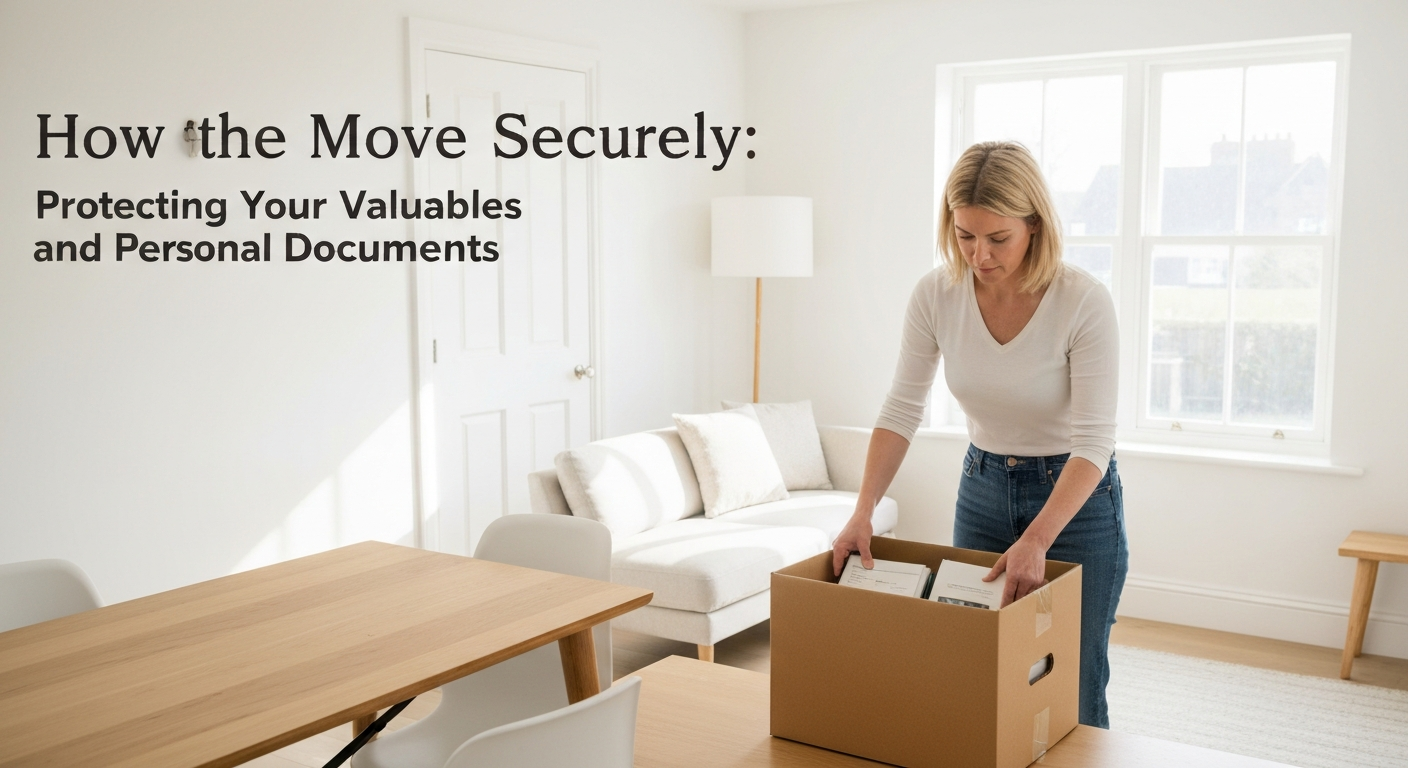
Quick Answer| Last updated: May 2026
Never put passports, financial documents, jewellery, or cash in a removal van. Transport all high-value and sensitive items in your own vehicle. Change the locks on your first day in the new property and set up Royal Mail redirection to prevent identity theft.
Learn how to protect passports, financial documents, jewellery, and digital data during a house move. Includes what removal companies won't cover and how to secure your new home from day one.
Key Takeaways
- •Plan Early: Start planning your move at least 6-8 weeks in advance to secure the best dates and rates.
- •Compare Quotes: Always compare at least 3 local removal quotes to ensure you get a fair market price.
- •Declutter: Reducing the volume of your belongings is the most effective way to lower your moving costs.
Want a quick estimate before you read the full guide?
Use our moving cost calculator →When moving house, most people focus on furniture and boxes — but it's easy to overlook the safety of your most important belongings. Passports, birth certificates, jewellery, hard drives, and cash all need special handling during a move. This guide explains how to protect valuables and sensitive documents throughout the relocation process.
Quick Answer
Never put passports, financial documents, jewellery, or cash into a removal van. Always transport high-value and sensitive items in your own vehicle. Create a dedicated "valuables bag" before moving day and keep it with you at all times.
Budgeting for your move? Use our moving cost calculator to estimate your full removal costs before you book.
What Counts as a "Valuable" During a Move?
Valuables fall into two categories: items that are financially valuable, and items that cannot be replaced. Both need special care.
| Category | Examples |
|---|---|
| Identity documents | Passports, driving licence, birth certificates, National Insurance cards |
| Financial documents | Bank statements, mortgage deeds, pension paperwork, share certificates |
| High-value items | Jewellery, watches, cash, collectibles, art |
| Digital assets | External hard drives, USB drives, laptops, cameras |
| Irreplaceable items | Family photos, diaries, handwritten letters, heirlooms |
| Medical records | Prescriptions, hospital letters, vaccination records |
The Golden Rule: Never Put Valuables in the Removal Van
Most professional removal companies have explicit clauses in their contracts stating they are not liable for cash, jewellery, documents, or items of irreplaceable sentimental value. Even the best firms with excellent "Goods in Transit" insurance will not cover these categories.
The safest approach is simple: transport your valuables bag personally, either in your own car or with a trusted family member. Do this even if it means making a separate journey.
How to Create a Valuables Bag Before Moving Day
A week before the move, set aside a dedicated bag or case for all critical items. Work through your home room by room to collect everything.
- Documents folder: Passports, driving licences, birth certificates, marriage certificate, mortgage or tenancy agreement, insurance policies.
- Jewellery pouch: Rings, necklaces, watches, and any items over £500 in value.
- Digital devices: Laptop, external hard drives, USB sticks with important files.
- Cash and cards: Any cash you've set aside for the move, plus your bank cards.
- Medications: Prescription medicines and anything you'll need in the first 24 hours.
- Family memories: Physical photo albums, diaries, childhood items you couldn't replace.
Label the bag clearly and store it in a locked car or with a trusted person on moving day. Let the removal team know that the bag is not to be loaded into the van.
Protecting Digital Data Before You Move
Hard drives and laptops are particularly vulnerable during a move. Even a short drop can permanently corrupt data.
Do This Before Moving
- Back up your computer to an external hard drive or cloud service like Google Drive or iCloud.
- Export important contacts and email archives.
- Screenshot or PDF your key online account details.
- Make a note of all software licence keys.
During the Move
- Wrap laptops in anti-static bubble wrap, then place in a padded bag.
- Transport hard drives in your personal bag, not the van.
- Remove all external devices from computers before packing the tower.
- Pack monitors upright with foam corner protectors.
Should You Tell the Removal Company About Valuables?
Yes — be transparent. When completing your inventory or booking survey, mention any items of significant value that will be transported in the van (such as an expensive TV, artwork, or antique furniture). This allows the removal company to ensure they have adequate insurance cover and to take extra care with packing.
For artwork or antiques worth over £1,000, ask your removal company whether specialist packing is included in the quote. Some firms require specialist art movers for high-value pieces. You can also check what your contents insurance covers during transit by contacting your insurer directly.
For more information on moving insurance, read our guide on Goods in Transit cover and moving insurance.
Securing Your New Home After Moving In
Moving in is a security risk in itself. You don't know how many copies of the keys exist, or whether the previous owners have changed the locks recently.
- Change the locks: This is the single most important security action. Do it on or within a few days of moving in.
- Secure the garage: Garage doors are often overlooked but are a common entry point.
- Check windows: Ensure all ground-floor window locks are functional before leaving the property.
- Forward your mail: Set up Royal Mail redirection to prevent identity theft from post delivered to your old address. Read our guide on setting up mail redirection.
- Update financial institutions quickly: Change your address with your bank as soon as possible to prevent sensitive post from going to the wrong address.
Creating an Inventory for Insurance Purposes
If you own high-value items, creating a home inventory before you move is excellent practice. Use a spreadsheet to record each item, its estimated value, and the purchase date. For expensive items, photograph them individually and store the photos on cloud storage.
This inventory will be invaluable if you ever need to make a home insurance claim. The Citizens Advice guide to home insurance explains what a standard contents policy covers and what usually requires a separate valuation or rider.
Key Takeaways
- Transport all documents, jewellery, cash, and irreplaceable items in your own vehicle.
- Back up all digital data to the cloud before moving day.
- Be transparent with your removal company about high-value items in the van.
- Change the locks within the first few days of moving in.
- Set up Royal Mail redirection to protect against identity theft.
- Create a home inventory with photos for insurance purposes.
Helpful Moving Resources
Frequently Asked Questions
Will a removal company insure my jewellery?
Most removal companies explicitly exclude jewellery, cash, and documents from their Goods in Transit insurance. Always transport these items yourself and check your home contents policy to see if it covers items during a move.
Should I photograph my belongings before the move?
Yes. Photographing high-value items before packing them provides evidence of their pre-move condition, which is essential for any insurance claim. Store photos on a cloud service so they're accessible even if your devices are damaged.
How do I change my address for important documents after moving?
Update your address with HMRC, the DVLA, your bank, and your GP as soon as possible. Use the GOV.UK 'Tell Us Once' service for government departments. Set up Royal Mail redirection as a safety net while you work through the full list.
What should I do if something valuable goes missing on moving day?
Report it to the removal company immediately in writing. If an item was listed on the inventory and cannot be accounted for, the company may be liable. Contact your insurer and, if theft is suspected, report it to the police for a crime reference number.
Is it safe to pack documents in removal boxes?
We strongly advise against packing identity documents, financial records, or irreplaceable paperwork in removal boxes. Keep them in a separate bag in your own vehicle. For less critical paperwork, use clearly labelled document boxes with lids.
Ready to Plan Your Move?
Use our free moving cost calculator to get a rough estimate, then compare local quotes before booking.
Free to use · No obligation · Estimates for planning only
Official & Trustworthy Resources
For further official guidance on moving house in the UK, we recommend consulting the following trusted organisations:
Frequently Asked Questions
How much does it cost to move house in the UK?
The average cost of moving house in the UK ranges from £800 to £2,500 depending on property size, distance, and whether you use professional packing services.
What affects removal company prices?
Key factors include the volume of your belongings, the distance of the move, ease of access (stairs, parking), and the time of year (weekends and summer are more expensive).
Are removal costs higher on weekends?
Yes, Fridays and Saturdays are the most popular days to move, meaning removal companies often charge a premium. Moving mid-week can save you up to 20%.
Can I reduce moving costs by comparing quotes?
Absolutely. We recommend comparing at least 3 local quotes from verified removal companies to ensure you get a fair market rate and avoid overpaying.
Ready to Estimate Your Moving Costs?
Use our free, AI-powered moving cost calculator to get an instant, accurate estimate for your UK house move. No hidden fees, just honest pricing.