The Ultimate Guide to Moving Appliances: Washing Machines, Fridges & More
Move Cost Calculator Team
content compiled from credible research to provide accurate, reliable information.
Quick Answer| Last updated: May 2026
Defrost fridges 48 hours before moving and transport them upright. Install transit bolts in your washing machine to protect the drum. Always turn off water and gas supplies before disconnecting.
Learn how to safely disconnect, prepare, and transport large household appliances to your new home without causing damage or leaks.
Key Takeaways
- •Plan Early: Start planning your move at least 6-8 weeks in advance to secure the best dates and rates.
- •Compare Quotes: Always compare at least 3 local removal quotes to ensure you get a fair market price.
- •Declutter: Reducing the volume of your belongings is the most effective way to lower your moving costs.
Want a quick estimate before you read the full guide?
Use our moving cost calculator →Large white goods—washing machines, fridge freezers, and dishwashers—are among the heaviest and most awkward items to move. Improper preparation can lead to water damage in your home, broken appliances, or serious injury. This guide explains how to prepare your appliances for moving day.
Quick Answer
Defrost fridges 48 hours before moving and transport them upright. Install transit bolts in your washing machine to protect the drum. Always turn off water and gas supplies before disconnecting, and let fridges settle for 24 hours before plugging them in at the new house.
1. Moving a Fridge Freezer
Fridges require the most preparation time of any appliance.
- Empty and Defrost: At least 48 hours before the move, empty the fridge/freezer, unplug it, and leave the doors open to defrost. Place towels underneath to catch the water.
- Clean and Dry: Thoroughly clean the interior and ensure it is completely dry to prevent mold growth during transit.
- Secure Parts: Remove all glass shelves and drawers and pack them separately. Tape the doors shut.
Transporting Fridges
Always transport a fridge upright. If it must be tilted to fit in the van, tilt it as little as possible. Once at the new house, let the fridge stand upright unplugged for at least 24 hours. This allows the compressor oil to settle; plugging it in too soon can destroy the motor.
2. Moving a Washing Machine
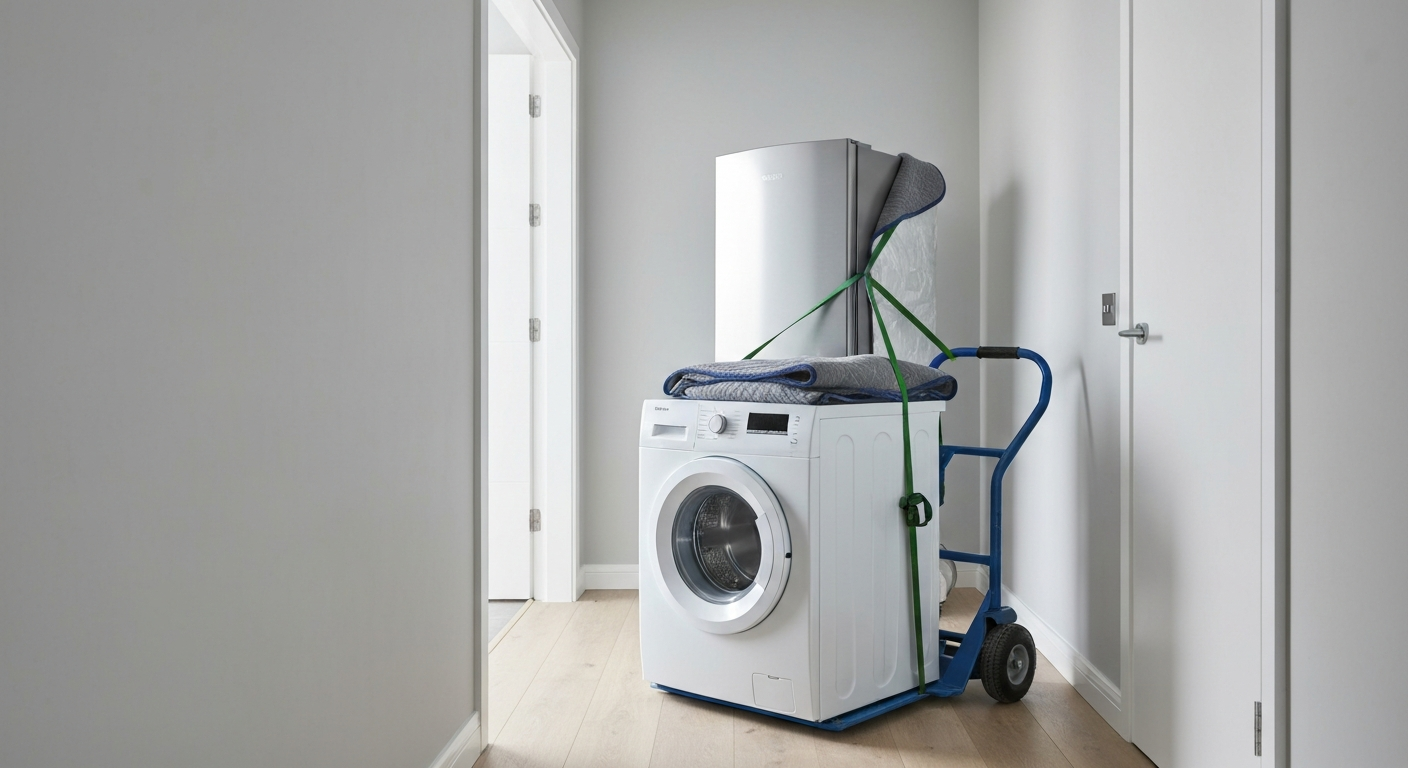
Washing machines are incredibly heavy due to the concrete blocks inside them used for stabilization. If you are moving yourself, ensure you have a sack barrow and help. If you're hiring help, check our guide on man and van prices.
- Disconnect: Turn off the water supply valves. Disconnect the hot and cold hoses and drain any remaining water into a bucket. Keep the hoses inside the machine drum.
- Drain the filter: Open the filter at the bottom front of the machine and drain the residual water.
- Install Transit Bolts: This is crucial. You must reinstall the transit bolts (shipping bolts) that came with the machine when you bought it. These lock the drum in place. Moving a washing machine without transit bolts can severely damage the suspension system.
3. Moving Cookers and Ovens
Electric Ovens: Unplug the oven. If it is hardwired, you should hire a qualified electrician to disconnect it safely. Remove all racks and baking trays and pack them separately. Tape the door shut.
Gas Ovens: By law in the UK, any gas appliance must be disconnected (and reconnected at the new property) by a Gas Safe registered engineer. Do not attempt to disconnect a gas cooker yourself. You can find registered engineers via the official Gas Safe Register.
Professional Help
Because of the weight and risk of damage, many people prefer to leave appliance moving to professional removal companies. If you're comparing costs, use our moving cost calculator to estimate the price of a professional move, which usually includes the safe transport of all major appliances (though you must still disconnect them prior to arrival).
Ready to Plan Your Move?
Take the stress out of your relocation by understanding your costs upfront. Use our free tools to estimate your moving expenses and compare local quotes.
Official & Trustworthy Resources
For further official guidance on moving house in the UK, we recommend consulting the following trusted organisations:
Frequently Asked Questions
How much does it cost to move house in the UK?
The average cost of moving house in the UK ranges from £800 to £2,500 depending on property size, distance, and whether you use professional packing services.
What affects removal company prices?
Key factors include the volume of your belongings, the distance of the move, ease of access (stairs, parking), and the time of year (weekends and summer are more expensive).
Are removal costs higher on weekends?
Yes, Fridays and Saturdays are the most popular days to move, meaning removal companies often charge a premium. Moving mid-week can save you up to 20%.
Can I reduce moving costs by comparing quotes?
Absolutely. We recommend comparing at least 3 local quotes from verified removal companies to ensure you get a fair market rate and avoid overpaying.
Ready to Estimate Your Moving Costs?
Use our free, AI-powered moving cost calculator to get an instant, accurate estimate for your UK house move. No hidden fees, just honest pricing.